The latest edition of adesso’s “GenAI Impact Report 2026” makes this clear. 500 executives in Germany were surveyed for the new edition of the annual study, as well as, for the first time, over 1,000 consumers. The results show that GenAI adoption is well advanced, but its impact in key areas still falls short of expectations.
Internal Progress, External Frustration
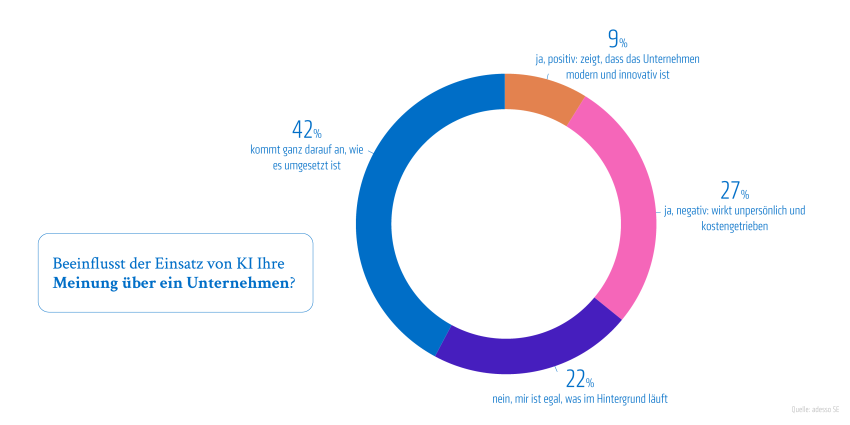
This discrepancy is particularly apparent in the use of GenAI in customer service. While 84% of companies are convinced that GenAI-based conversational AI solutions have improved service quality, only 23% of customers share this view. Furthermore, 61% of respondents say they felt “fobbed off” when interacting with automated systems.
The figures highlight the key perception gap: companies primarily evaluate GenAI in terms of efficiency gains, whereas customers judge it based on service quality and its ability to problem-solve. The use of GenAI in customer interactions therefore becomes a strategic design question. What matters is not the technology itself, but how it is implemented.
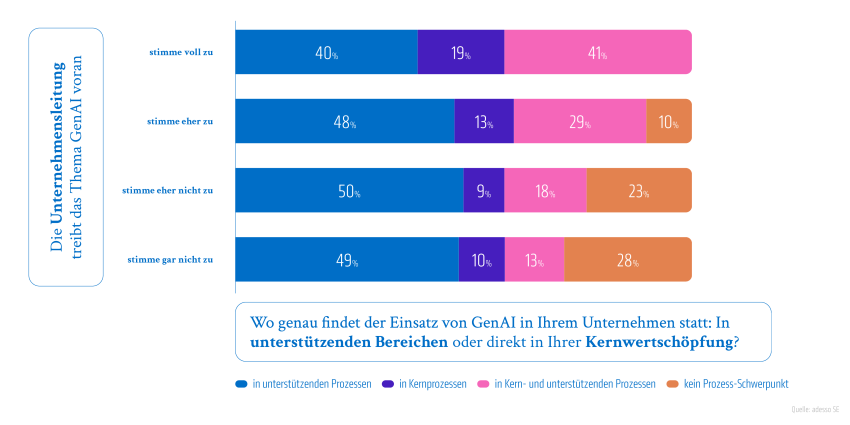
GenAI maturity varies widely across companies. While 49% are still in the experimental stage, only 13% have already fully integrated GenAI into their core processes. As a result, the technology remains limited to individual use cases and efficiency initiatives in many organisations, limiting its impact on the customer experience.
Transformation Becomes a Leadership Task
At the same time, the role of technology is undergoing a fundamental shift. GenAI is no longer just a tool for improving efficiency; it is becoming the operational foundation for knowledge work and business processes. Two-thirds of executives already use such applications daily. However, its strategic use often remains limited: almost half of companies primarily use GenAI to optimise existing processes, while only a third deploy it specifically to develop new business models.