
Interview

Why powerful trading platforms are crucial for institutional investors

A professional exchange on equal footing

by Nehir Safak-Turhan

Trading platforms for institutional investors such as pension funds, insurance companies, fund managers, and other financial institutions play a central role in capital market business. They differ significantly from platforms for private investors due to higher volumes, more complex functions, regulatory requirements, and direct access to liquidity. These trading platforms provide liquidity that stabilizes the market, enables efficient price formation through large, data-based orders, increase transparency and compliance with regulatory authorities, and automate complex trading strategies.

This requires consideration of high and specialized demands on technology, transparency, compliance, integration, and service quality. At the same time, individuality is a strategic success factor in institutional trading. Trading platforms must therefore not only offer technological excellence, but also the ability to understand and serve each institutional client individually.

UBS's trading platforms for institutional clients are among the most technologically advanced systems in global investment banking. They provide professional investors with direct, electronic, and regulatory-compliant access to markets worldwide.

In this expert interview, we discuss the specifics with Giorgio Cescato, ETF Capital Markets, UBS Asset Management.
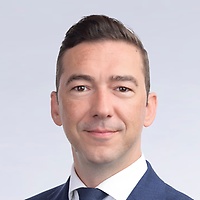

Giorgio Cescato...

... has been working in the fund industry for over 20 years, thereof 15 years in the ETF business at UBS Asset Management. In his role as investment specialist in the UBS ETF Capital Markets team he is the central conduit for primary and secondary trading of UBS ETFs, advising clients on bespoke trading strategies to ensure they receive tight pricing and maximize liquidity when trading UBS ETFs through either the risk or NAV mechanism. Giorgio also acts as an interface between UBS ETFs and its external partners (Authorized Participants and Official Market Makers) for the trading of UBS ETFs.


Nehir: UBS is one of the world's largest asset managers. What can you tell us about UBS Asset Management and its ETFs?

Giorgio Cescato: UBS Asset Management is one of the biggest Asset Managers in the world with over USD2trn of invested assets (end Q3, 2025). Almost half (USD 992bn) is in passive strategies – in fact, we are the number one Europe-based manager of index funds and one of the biggest for exchange traded funds (ETFs). We are the second largest provider of currency hedged ETFs in the UCITS ETF market with USD38.3bn across 70 funds. Investors can use hedged share classes to mitigate currency risk and UBS AM’s use of the share class framework means investors may be able to switch between unhedged and hedged share classes for minimal cost.

UBS AM has ETF strategies tracking equity, fixed income and commodity exposures and we utilise both synthetic (where the Portfolio Manager buys a swap) and physical replication (where the Portfolio Manager buys the underlying assets). Last year, we launched a cost-efficient core ETF range with Total Expense Ratios of MSCI World at 6bps, MSCI Europe at 6bps and S&P 500 at 3bps, as well as our first active ETFs.

As the name suggests, you can trade ETFs on stock exchanges like Xetra, SIX Stock Exchange, Euronext Milan, Euronext Amsterdam and London Stock Exchange, but also multi-lateral trading facilities (Bloomberg RFQE, Tradeweb and RFQ Hub) and over the counter (OTC) via the systematic internaliser regime.

Nehir: That's very impressive and shows a high level of responsibility. Why is it important to have your own platform for primary market transactions?

Giorgio Cescato: We have built a state-of-the-art order submission portal (OST) for our Authorised Participants (APs - the global investment banks and proprietary market makers) to submit primary market ETF orders. By having our own platform, we are in control of the tech stack and build priorities for our business. We are not dependent on other stakeholders and can prioritise according to our needs and budgets.

The OST is fully integrated into our portfolio management and risk systems, so we offer a smooth and hassle-free experience for our Portfolio Managers and APs. In addition, annual maintenance fees are lower as with external platforms often you are charged on a per ticket basis.

Nehir: The market is constantly evolving and placing new demands on us. Where do you see further room for improvement in the future?

Giorgio Cescato: We plan to enable FIX connectivity to our APs in Q1 2026. FIX connectivity will allow a direct connection between us and the APs’ order management systems, reducing operational risks and offering front-to-back automation across primary and secondary markets.

This should enable APs to quote tighter bid ask spreads and respectively our clients should have lower transaction costs. We would expect most primary market orders to be placed via FIX. Automation is very important in the UCITS ETF spaces as APs are frequently converting across share classes of a sub fund to optimise balance sheet usage and minimize funding costs.

Nehir: Very interesting insights. Thank you for the interview.


Shaping the future of banking with adesso

The financial world is changing rapidly. Whether it's digital transformation, regulatory requirements or new customer expectations, adesso supports banks and financial service providers with industry-specific expertise, innovative technologies and tailor-made IT solutions. Discover how we work together to optimise processes, improve customer experiences and enable sustainable growth.

Learn more and get off to a successful start


Do you have any questions?

There is no website or brochure which can replace a personal meeting to talk about your goals and topics. We are looking forward to an appointment on site.

Contact